
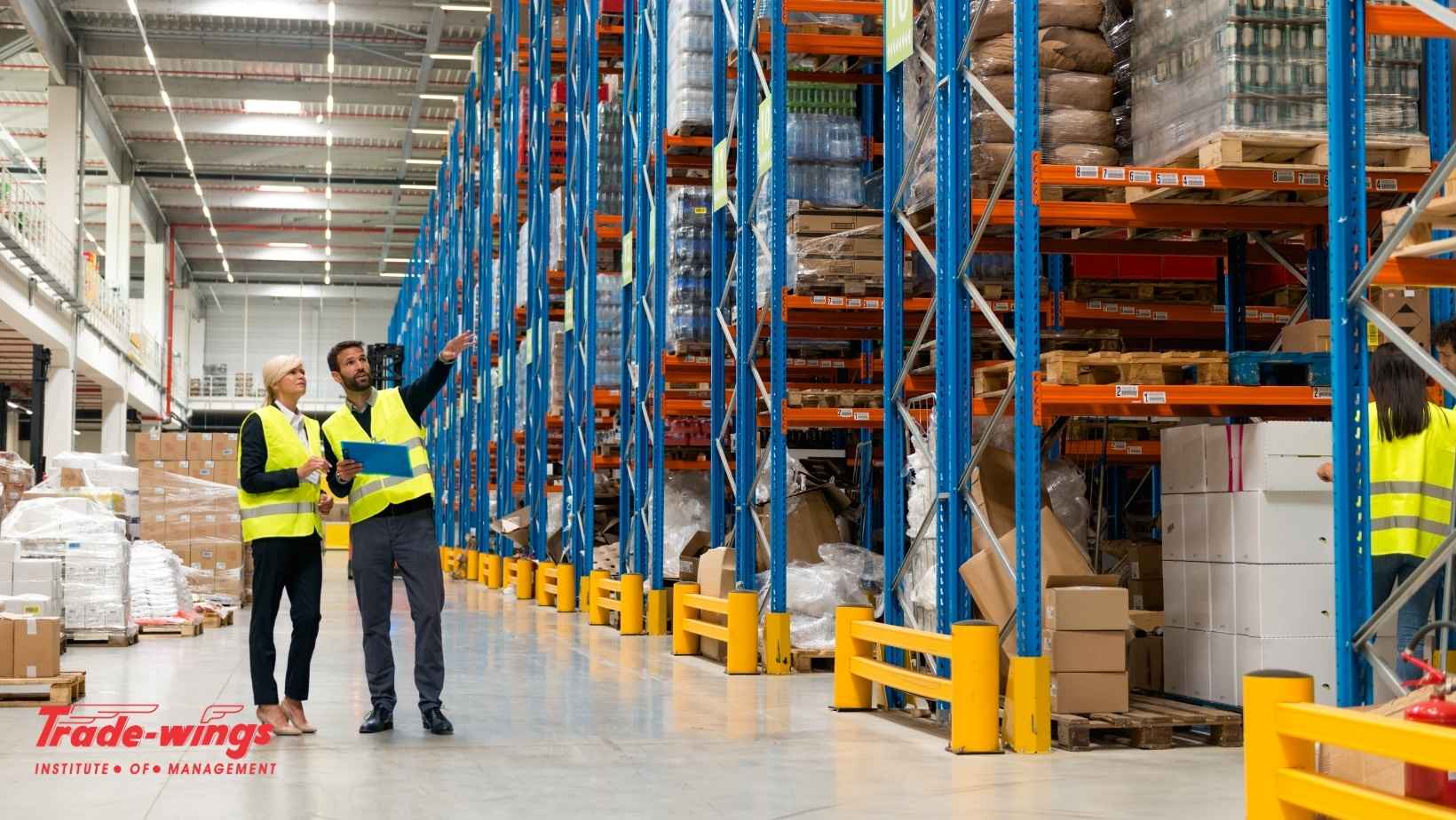
A warehouse is no longer simply a place where products are stored until they are needed. Modern warehouses function as highly coordinated logistics hubs where inventory, technology, transportation, order fulfilment and customer expectations come together.
As e-commerce, retail, manufacturing, FMCG, pharmaceuticals and international trade continue to depend on efficient supply chains, professionals with warehouse and logistics skills can find opportunities across multiple industries. A well-chosen warehouse management course can therefore be a useful starting point for students, graduates and working professionals planning a career in logistics.
But which course should you choose? The answer depends on your career objective, existing qualifications and the type of logistics role you want to pursue.
This guide explains the major types of warehouse management courses, the skills they teach, career opportunities after completion, and how to select the right programme.
What Is Warehouse Management?
Warehouse management is the process of planning, organising and controlling activities involved in receiving, storing, tracking, picking, packing and dispatching goods.
A modern warehouse may involve:
- Inventory management
- Goods receiving and put-away
- Storage planning
- Stock counting
- Order processing
- Picking and packing
- Dispatch coordination
- Material handling
- Warehouse safety
- Transportation coordination
- Warehouse Management Systems (WMS)
- Data and performance analysis
The objective is not simply to store products. It is to ensure that the right product is available in the right quantity, at the right location and at the right time, while keeping operational costs under control.
Why Are Warehouse Management Skills Important for Logistics Careers?
Warehousing is one of the core components of the supply chain. A logistics professional may coordinate transportation and distribution, but those activities depend heavily on accurate inventory and efficient warehouse operations.
Modern logistics roles increasingly require knowledge of both physical operations and digital systems. Industry-oriented programmes commonly cover inventory control, warehouse processes, WMS/ERP technology and logistics coordination.
A good warehouse management course can help you develop:
- Inventory control skills
- Understanding of warehouse processes
- Order fulfilment knowledge
- Logistics coordination skills
- Basic supply chain understanding
- Warehouse technology awareness
- Analytical and problem-solving abilities
- Communication and team-management skills
Which Warehouse Management Courses Are Best?
There is no single "best" warehouse management course for everyone. The right choice depends on where you want to go in your logistics career.
Here are the main learning paths worth considering.
1. Certificate Course in Warehouse Management
A short-term warehouse management certification course can be a good starting point for beginners.
These programmes generally introduce learners to:
- Warehouse operations
- Receiving and dispatch
- Storage systems
- Inventory management
- Stock control
- Order fulfilment
- Warehouse safety
- Basic logistics processes
Who should choose it?
This option can work well for:
- Students
- Fresh graduates
- Beginners entering logistics
- Existing warehouse employees
- Professionals looking to understand warehouse operations
If your objective is to quickly build foundational knowledge rather than pursue a long academic programme, a certificate can be a practical starting point.
2. Warehouse & Inventory Management Course
Warehouse management and inventory management are closely connected, making this a valuable combination for logistics careers.
A course covering both areas can introduce concepts such as:
- Inventory classification
- Stock levels
- Reordering
- Stock accuracy
- Inventory counting
- Storage optimisation
- Demand and supply coordination
- Warehouse productivity
Inventory planning is also becoming increasingly analytical. Formal programmes in inventory planning and warehousing can cover areas such as ABC analysis, EOQ, JIT systems, demand forecasting, warehouse layout and WMS technology.
Best for:
People interested in roles such as:
- Inventory Executive
- Inventory Controller
- Store Executive
- Warehouse Executive
- Logistics Coordinator
3. Logistics & Supply Chain Management Course
If your goal is broader than warehouse operations, consider a logistics and supply chain management course.
Instead of focusing only on warehouses, these programmes generally cover the movement of goods across the wider supply chain.
Typical subjects may include:
- Procurement
- Inventory management
- Warehousing
- Transportation
- Distribution
- Demand planning
- Supplier management
- Logistics documentation
- Supply chain analytics
The National Qualification Register, for example, identifies storage, inventory, transportation, supply chain workflows, technology and process optimisation as components of logistics-oriented qualifications.
Best for:
Learners who eventually want to progress towards:
- Supply Chain Executive
- Logistics Executive
- Distribution Executive
- Supply Chain Analyst
- Logistics Manager
- Operations Manager
4. Warehouse Management + WMS Training
Technology has changed how warehouses operate.
A Warehouse Management System (WMS) can help organisations manage inventory, warehouse locations, orders, picking, receiving and dispatch processes digitally.
Therefore, when comparing warehouse management courses, look for programmes that introduce learners to:
- WMS fundamentals
- Inventory tracking
- Digital warehouse operations
- Barcode and scanning concepts
- Order management
- Warehouse data
- ERP integration
- Basic reporting
WMS and ERP knowledge is increasingly relevant because modern logistics operations depend on digital inventory and order visibility.
Why is WMS knowledge valuable?
A candidate who understands both warehouse operations and warehouse technology can have a stronger foundation than someone who only understands manual processes.
For learners interested in technology-driven supply chains, this can also become a pathway towards specialised ERP or WMS roles later in their careers.
5. Air Cargo & Logistics Management Course
For students interested in aviation logistics, airports or international cargo, air cargo logistics management can be an interesting specialisation.
Air cargo operations connect airlines, airports, freight forwarders, customs processes, warehouses and international supply chains.
Relevant topics can include:
- Air cargo fundamentals
- Cargo handling
- Freight documentation
- Cargo terminals
- Warehousing
- Freight forwarding
- Supply chain coordination
- International logistics
This is particularly relevant if you want to work at the intersection of aviation and logistics rather than traditional warehouse operations alone.
Trade Wings Institute of Management offers industry-focused programmes across logistics and cargo-related fields as part of its broader online education portfolio.
6. Shipping, Logistics & Freight Forwarding Courses
If you are interested in international trade, freight movement and logistics coordination, consider a course that combines:
Shipping + Logistics + Freight Forwarding.
Such a programme can provide a broader understanding of how cargo moves between suppliers, warehouses, ports, freight forwarders and customers.
You may learn about:
- Freight forwarding
- Shipping documentation
- Cargo movement
- Transportation
- Warehousing
- Import and export processes
- Logistics coordination
- Supply chain operations
This can be a useful option for learners who do not want to restrict themselves to warehouse jobs.
What Should You Look for in a Warehouse Management Course?
Before enrolling, don't select a course only because its title contains the words "warehouse management."
Look at the actual curriculum.
1. Practical Warehouse Operations
The course should explain how warehouses function from receiving goods to final dispatch.
2. Inventory Management
Inventory accuracy is fundamental to warehouse efficiency. Make sure the programme covers stock control, inventory tracking and related processes.
3. WMS & Digital Tools
Technology exposure can make a course more relevant to modern logistics environments.
4. Supply Chain Fundamentals
Understanding how warehousing connects with procurement, transportation and distribution gives you a broader perspective.
5. Logistics Documentation
For logistics and freight-related roles, documentation knowledge can be valuable.
6. Industry Relevance
Look for a curriculum that reflects contemporary logistics practices rather than focusing exclusively on theoretical definitions.
7. Certification
A course completion certificate can help demonstrate that you have undertaken structured learning. However, certification should complement practical knowledge—not replace it.
What Jobs Can You Get After a Warehouse Management Course?
A warehouse management course can help build foundational knowledge for several logistics positions.
Depending on your qualification, experience and additional skills, potential roles include:
Warehouse Executive
Responsible for day-to-day warehouse activities, inventory movement and coordination.
Inventory Executive
Focuses on stock records, inventory accuracy and stock movement.
Store Executive
Handles storage, material records, receiving and issuing goods.
Logistics Coordinator
Coordinates movement of products between warehouses, suppliers, transporters and customers.
Warehouse Supervisor
Oversees warehouse teams and ensures that operational processes are followed.
Distribution Executive
Works with dispatch and distribution activities to ensure timely movement of goods.
Supply Chain Executive
Coordinates broader supply chain activities involving procurement, inventory, logistics and distribution.
With experience and additional education, professionals can progress towards supervisory, managerial and specialised supply chain positions.
Skills You Should Build Alongside a Warehouse Management Course
A certificate alone does not build a logistics career. Combine your course with practical and digital skills.
Excel and Data Skills
Learn to work with:
- Tables
- Filters
- Pivot tables
- Basic formulas
- Inventory reports
- Operational dashboards
Communication
Warehouse and logistics professionals coordinate with multiple teams, including suppliers, transporters, warehouse staff and customers.
Problem Solving
Logistics frequently involves unexpected situations such as:
- Stock discrepancies
- Delayed shipments
- Damaged goods
- Incorrect orders
- Capacity constraints
Being able to identify the problem and coordinate a solution is an important professional skill.
Technology
Build awareness of:
- WMS
- ERP
- Barcode systems
- Inventory software
- Digital reporting
- Warehouse automation
Operational Understanding
Don't learn logistics only from a textbook. Understand how products physically move through a warehouse and supply chain.
Who Should Enrol in a Warehouse Management Course?
A warehouse management programme can be suitable for:
- Students after 12th
- Graduates
- Freshers
- Warehouse employees
- Store executives
- Logistics professionals
- Supply chain professionals
- Working professionals looking to upskill
- People transitioning into logistics careers
You don't necessarily need years of experience to start learning warehouse management. Many entry-level logistics programmes are designed to build foundational knowledge before learners enter the industry.
How to Choose the Best Warehouse Management Course for Your Career
Before enrolling, ask yourself these five questions:
1. Do I want warehouse or broader logistics roles?
Choose a specialised warehouse programme for warehouse operations. Choose logistics and supply chain management if you want a wider career path.
2. Does the course include inventory management?
Inventory is one of the most important components of warehouse operations.
3. Does it cover modern technology?
Look for WMS, ERP, digital inventory and data-related topics.
4. Is the course flexible enough for me?
Online, self-paced programmes can be useful for working professionals who cannot attend fixed classroom sessions.
5. Does the institute have relevant industry expertise?
Consider the institute's experience, curriculum, certification, learning format and overall industry focus before enrolling.
Why Choose Trade Wings Institute of Management for Logistics Education?
Trade Wings Institute of Management offers online, industry-focused programmes across aviation, travel and tourism, hospitality and logistics. Its academic ecosystem traces back to Trade Wings Institute of Management, with the institution stating that it has trained more than 50,000 learners through its wider academic ecosystem.
For learners interested in logistics, the institute's broader cargo and logistics learning pathway can help build an understanding of areas such as cargo operations, freight forwarding, logistics and supply chain management.
The online learning model can also be useful for students and working professionals who want to study without committing to a traditional classroom schedule.
Frequently Asked Questions About Warehouse Management Courses
Which course is best for warehouse management?
A course covering warehouse operations, inventory management, logistics fundamentals and WMS is a strong choice for beginners. If you want a broader career in supply chain management, choose a programme covering logistics and supply chain operations as well.
Is warehouse management a good career option?
Yes. Warehouse operations are an important part of supply chains serving sectors such as e-commerce, retail, manufacturing, FMCG, pharmaceuticals and international trade. The career potential depends on your skills, experience, qualifications and specialisation.
What qualifications are required for a warehouse management course?
Eligibility varies by programme. Entry-level courses may be suitable for students and beginners, while advanced diploma or postgraduate programmes may have specific academic requirements.
Is WMS important for a logistics career?
Yes. Knowledge of Warehouse Management Systems can help learners understand how modern warehouses digitally track inventory, orders and operational activities.
Can I do a warehouse management course online?
Yes. Online warehouse and logistics programmes are available, including flexible programmes designed for students and working professionals.
What jobs can I get after a warehouse management course?
Potential entry-level roles include Warehouse Executive, Inventory Executive, Store Executive, Logistics Coordinator and Distribution Executive. Additional qualifications and experience can support progression into supervisory and management roles.
Is warehouse management the same as logistics?
No. Warehouse management focuses primarily on activities inside and around the warehouse, such as receiving, storage, inventory, picking, packing and dispatch. Logistics is broader and includes transportation, distribution and coordination of goods across the supply chain.
Can I move from warehouse operations to supply chain management?
Yes. Warehouse experience can provide valuable operational knowledge. You can strengthen your profile by learning inventory management, transportation, procurement, analytics, WMS/ERP systems and broader supply chain concepts.
Final Takeaway
The best warehouse management course is not necessarily the longest or most expensive one. It is the programme that matches your career objective and teaches skills that logistics employers actually use.
For beginners, a Warehouse Management + Inventory Management course can provide a strong foundation. If you want wider career opportunities, consider Logistics & Supply Chain Management. If you are interested in technology, prioritise WMS and ERP exposure. And if aviation or international cargo interests you, Air Cargo Logistics or Freight Forwarding can provide a valuable specialisation.
The logistics industry is increasingly connected, digital and data-driven. Building knowledge across warehousing, inventory, transportation, technology and supply chain operations can help you create a stronger foundation for long-term career growth.
For learners looking for flexible, career-focused education in logistics and related industries, explore the programmes available through Trade Wings Institute of Management.




Leave a comment