Have you ever wondered what happens after an aircraft lands and before it takes off again? While passengers collect their belongings, walk towards the terminal and prepare for their next journey, an entirely different operation begins outside the aircraft.
Within minutes, airport ground staff, baggage handlers, engineers, cleaning crews, catering teams and specialised vehicles begin working together. Baggage is unloaded, aircraft systems are checked, fuel is replenished, cabins are cleaned and preparations for the next departure begin. Every activity follows a planned sequence, and even a small delay can affect the flight schedule.
This entire process is an important part of airport ramp operations, one of the most essential functions within the aviation industry. It involves managing aircraft ground handling, baggage movement, passenger boarding, aircraft servicing, safety procedures and departure coordination.
For students interested in building a career in aviation, understanding these activities can open doors to several exciting career possibilities. An Airport Ramp Operations Course introduces aspiring aviation professionals to the fundamentals of aircraft ground handling, ramp safety, airport equipment and aircraft turnaround procedures.
At Trade Wings Travel Institute, students can explore aviation-focused learning opportunities, including the Airport Ramp Operations Course, Certificate Course in Aviation Management and Online Cabin Crew Courses.
But before exploring these career opportunities, let's understand what actually happens behind the scenes when an aircraft arrives at an airport.
What Are Airport Ramp Operations?
An airport ramp, commonly known as an apron, is the designated area where aircraft park for activities such as passenger boarding, baggage handling, refuelling, catering and maintenance.
Think of it as a service station for aircraft. Just as a vehicle requires fuel, cleaning and routine checks before beginning another journey, an aircraft also needs several ground services before it can take off again.
Airport ramp operations involve coordinating these activities while ensuring that aircraft, ground personnel and support vehicles operate safely.
One of the most important processes associated with ramp operations is aircraft turnaround. It refers to the complete process of preparing an aircraft for its next flight after arrival. The time available depends on the aircraft type, airline schedule, airport facilities and operational requirements.
Every department must work together to complete its responsibilities efficiently without compromising safety.
Step 1: Aircraft Arrival and Parking
The moment an aircraft lands, its journey towards the designated parking stand begins.
After touching down, the aircraft leaves the runway and follows the assigned taxiway. Air Traffic Control and ground control provide the necessary instructions to help pilots navigate safely through the airport.
As the aircraft approaches its parking position, it must be guided accurately into the designated stand.
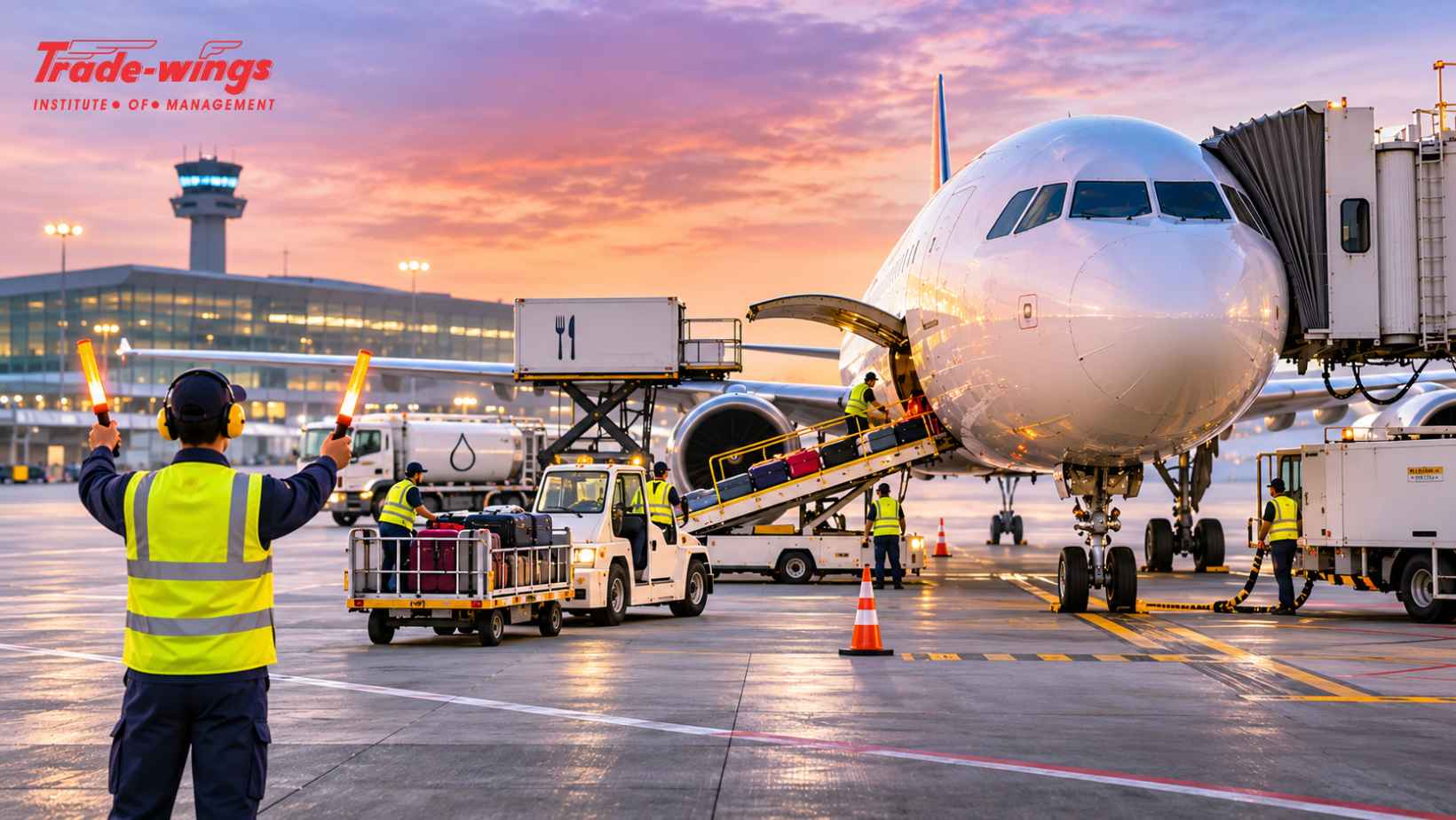
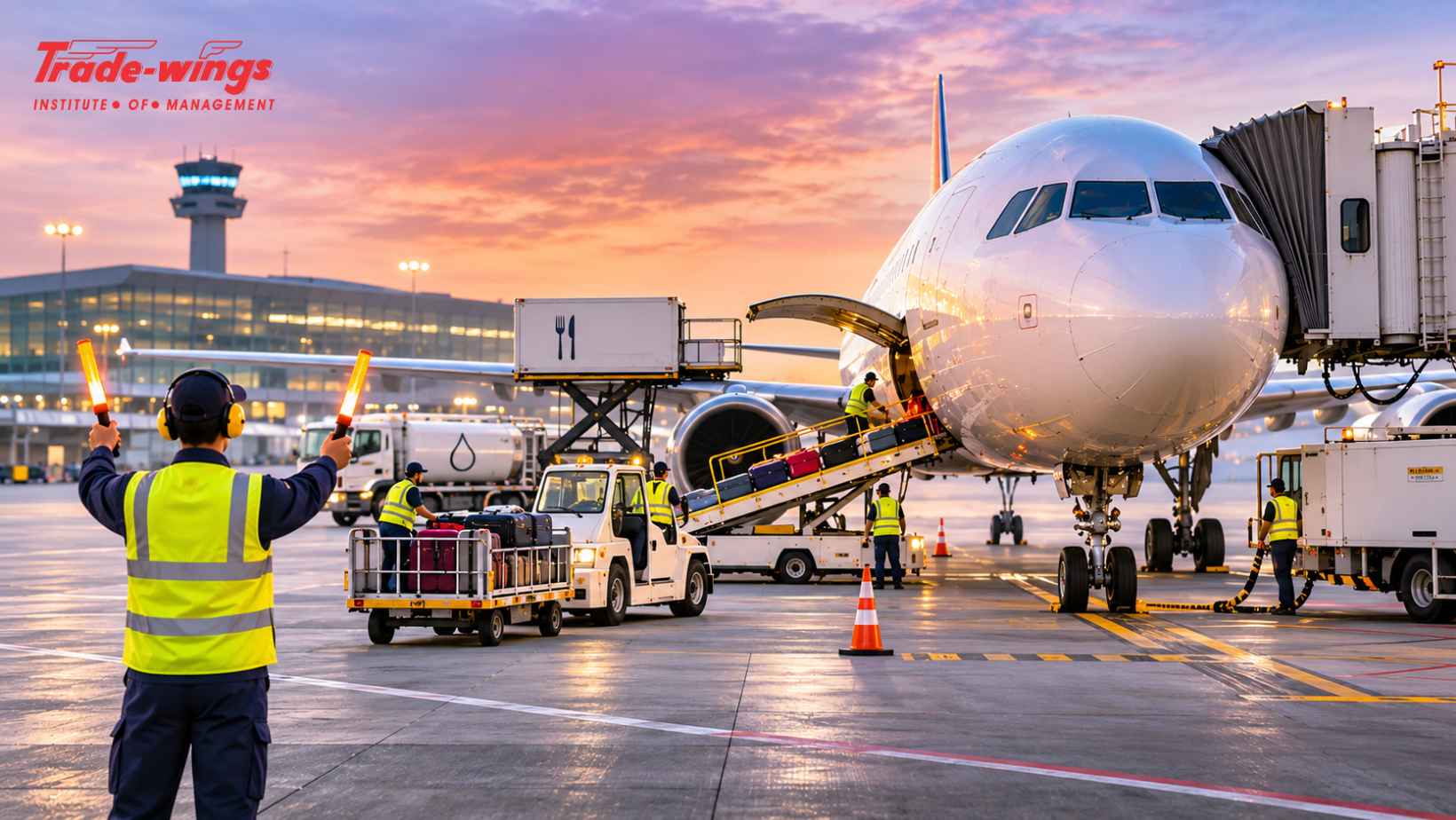
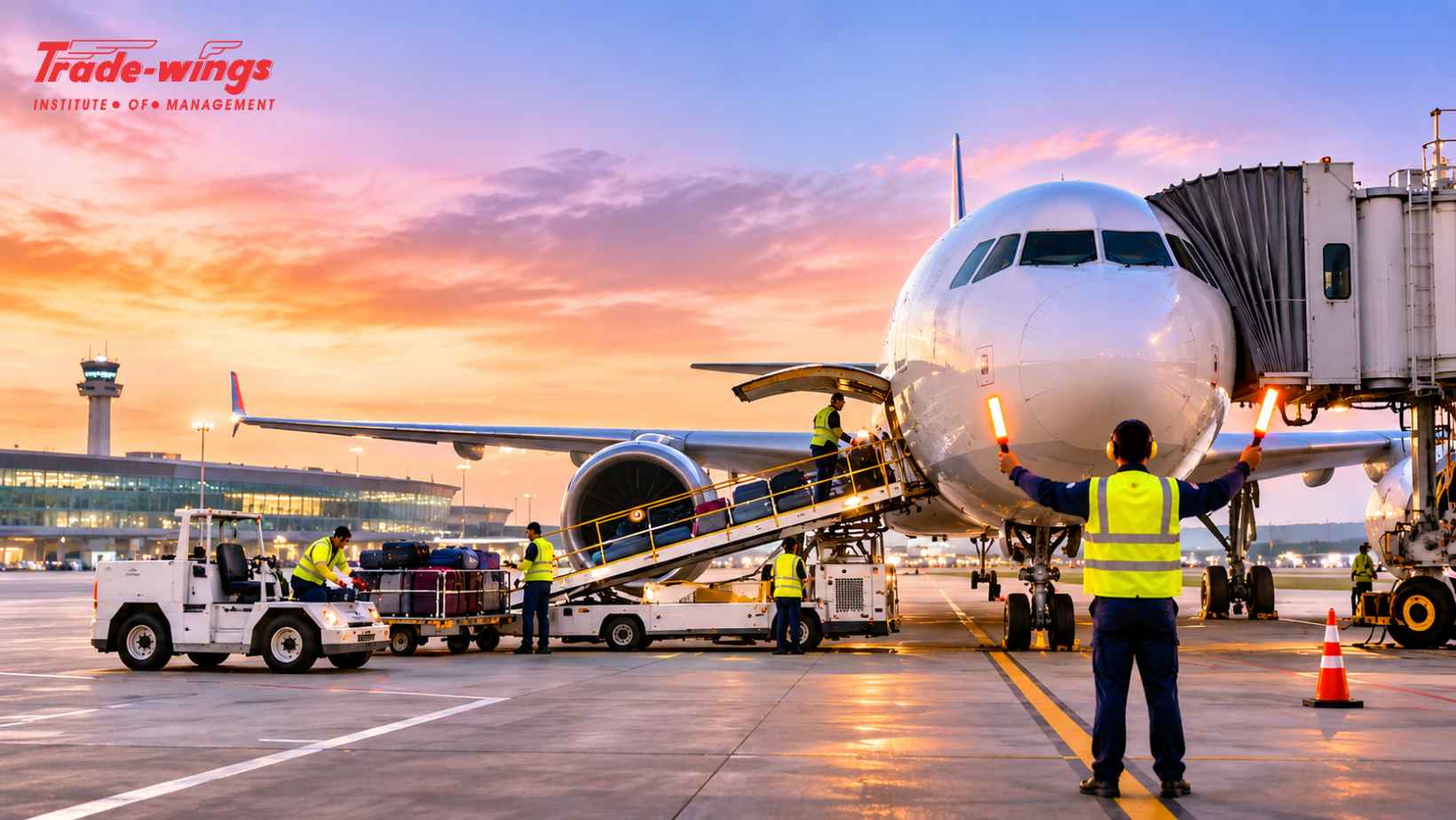
At some airports, a trained ramp marshaller uses hand signals to guide the aircraft towards its stopping position. Other airports use a Visual Docking Guidance System (VDGS), an electronic display that provides pilots with distance and positioning information.
Once the aircraft comes to a complete stop, the pilots apply the parking brakes. Ground personnel then place wheel chocks around the landing gear to prevent unwanted movement.
Although this may appear to be a simple activity, accurate aircraft positioning and safety checks are essential for all subsequent ground operations.
Step 2: Preparing the Aircraft for Ground Services
Once the aircraft is safely parked, ground staff begin preparing it for servicing.
At contact gates, a passenger boarding bridge, commonly called a jet bridge, is positioned near the aircraft door. At remote parking stands, passengers use mobile boarding stairs to reach the terminal.
The aircraft also requires electrical power while its engines are switched off.
This is where the Ground Power Unit (GPU) becomes important. It supplies electrical power to operate essential aircraft systems while the aircraft remains on the ground.
Another facility used during this stage is Preconditioned Air (PCA), which supplies conditioned air to help maintain a comfortable cabin temperature without relying on the aircraft's engines.
These ground services allow the aircraft to remain operational and comfortable while different teams complete their responsibilities.
Step 3: Passenger Disembarkation and Boarding
The first visible activity after an aircraft parks is usually passengers leaving the aircraft.
Depending on the parking position, passengers use the jet bridge or mobile stairs to reach the terminal. Airport personnel help manage passenger movement and maintain safety around the aircraft.
Once arriving passengers have disembarked and the cabin is ready, preparations for the next departure begin.
Ground staff and airline personnel coordinate passenger movement, boarding documents and gate announcements. The boarding process must also be aligned with other turnaround activities to ensure that the aircraft is ready for departure.
For passengers, this may appear to be an ordinary boarding procedure. However, it is an important part of a much larger airport operations process.
Step 4: Baggage and Cargo Handling
Have you ever wondered how your suitcase travels from the aircraft to the airport baggage carousel?
The process begins with the baggage-handling team.
Belt loaders are positioned near the aircraft's baggage compartment to help unload suitcases. The bags are transferred onto baggage carts, which transport them towards the airport's baggage handling area.
For the next departure, another team loads the outgoing luggage into the aircraft. Larger aircraft may also use specialised cargo-loading equipment to handle freight and baggage containers.
Every bag must be identified, handled correctly and transferred to the appropriate destination.
This is why baggage handling requires accuracy, coordination and timely communication between ground staff and airline personnel. A delay in this activity can affect the overall aircraft turnaround process.
Step 5: Aircraft Refuelling
An aircraft requires the correct amount of aviation fuel before beginning its next journey.
Refuelling is carried out using specialised fuel trucks or underground hydrant systems, depending on the airport's infrastructure.
The required fuel quantity is determined through flight planning and operational calculations. Factors such as the planned route, aircraft weight, weather conditions, alternate airports and regulatory fuel requirements are considered.
Trained personnel follow established safety procedures while connecting equipment, monitoring the operation and ensuring that refuelling is completed correctly.
It is not simply about filling an aircraft's fuel tanks. Every calculation matters because the aircraft must carry the appropriate amount of fuel for its journey.
Step 6: Catering and Aircraft Cleaning
A comfortable flight experience involves much more than comfortable seats and good service. Behind the scenes, catering and cleaning teams play an important role in preparing the aircraft.
Specialised catering trucks are designed to rise to the height of aircraft service doors. They remove used meal carts and replenish the aircraft with fresh food, beverages and other supplies.
The catering requirements depend on the airline's service standards and the duration of the upcoming flight.
At the same time, cleaning personnel enter the aircraft to prepare the cabin for the next group of passengers.
Their responsibilities may include cleaning tray tables, removing waste, vacuuming the cabin, refreshing lavatories and checking passenger areas.
Qualified aircraft maintenance personnel also carry out the inspections required for the next operation. If a technical issue is identified, it must be assessed and addressed by appropriately authorised maintenance personnel before the aircraft can be released for service.
Step 7: Water and Lavatory Services
Some of the most important airport ground services are also the least noticeable to passengers.
Potable water service vehicles replenish the aircraft's drinking water supply, supporting onboard facilities.
Lavatory service vehicles empty and service aircraft waste tanks according to established hygiene and safety procedures.
These activities are essential for maintaining aircraft cleanliness, hygiene and passenger comfort throughout the journey.
Step 8: Departure Preparation and Aircraft Pushback
Once all the necessary servicing activities are completed, the aircraft begins its final departure preparations.
Ground teams ensure that fuel hoses, catering equipment, baggage loaders and other ground support equipment have been disconnected and moved away from designated safety areas.
The jet bridge or mobile stairs are removed, aircraft doors are closed and the required departure documentation is finalised.
The flight crew receives important operational information, including the load sheet. This document contains information about the aircraft's weight and balance, helping the crew confirm that it remains within permitted operating limits.
Then comes one of the most recognisable activities on the airport ramp: pushback.
A specialised vehicle called a pushback tug connects to the aircraft's nose landing gear and moves it backwards away from the parking stand.
Once the required clearance is received from ground control, the aircraft begins moving towards the taxiway. Depending on the aircraft and operating procedure, engine start may take place during or after pushback.
After the pushback operation is completed, the tug is disconnected and the ramp team provides the appropriate all-clear signal.
The aircraft then taxis towards the designated runway, preparing for take-off.
For passengers, this is the beginning of another journey. For the ramp team, it marks the successful completion of a carefully coordinated operation.
Why Is Safety Important in Airport Ramp Operations?
An airport ramp is a high-activity environment where aircraft, moving vehicles, specialised equipment and ground personnel operate in close proximity.
Safety is therefore a shared responsibility.
One major concern is Foreign Object Debris (FOD). Loose stones, tools, metal pieces and other objects can cause serious damage if they enter an aircraft engine or interfere with aircraft equipment.
Ramp personnel conduct regular inspections and remove debris from operational areas.
Personal Protective Equipment (PPE) is equally important. Ground staff generally wear high-visibility reflective clothing so that vehicle operators and other personnel can identify them clearly. Depending on their duties, they may also require hearing protection, safety footwear, gloves and other protective equipment.
Communication is another essential part of ramp safety. Every department must coordinate its activities and follow established operational procedures.
Although completing aircraft turnaround within the scheduled time is important, safety must always take priority over speed.
What Skills Are Required for Airport Ramp Operations?
Working in airport ramp operations requires a combination of practical knowledge, communication skills and operational awareness.
Professionals working in this field must understand ground handling procedures, aircraft turnaround activities, airport safety regulations and the use of specialised ground support equipment.
Teamwork is particularly important because several departments work simultaneously around an aircraft. Employees must communicate clearly, follow instructions and coordinate their activities with other teams.
Time management, attention to detail, situational awareness and the ability to work in a fast-paced environment are also valuable skills.
Students interested in this field can develop foundational knowledge through an Airport Ramp Operations Course that introduces them to the responsibilities and procedures involved in aircraft ground handling.
How to Build a Career in Airport Ramp Operations?
The aviation industry offers several career opportunities for students interested in airport operations, airline management and ground handling.
An Airport Ramp Operations Course can help aspiring professionals understand the fundamentals of aircraft ground handling, ramp safety, baggage management, aircraft servicing and turnaround coordination.
At Trade Wings Travel Institute, students interested in aviation can also explore different learning pathways based on their career aspirations.
Airport Ramp Operations Course
This programme is relevant for students interested in understanding airport ground handling and aircraft turnaround activities. Learning about ramp safety, ground support equipment, aircraft servicing and operational coordination can help students build foundational knowledge of this specialised area.
Certificate Course in Aviation Management
Students who want to understand the broader aviation industry can explore a Certificate Course in Aviation Management. It introduces the fundamentals of airport management, airline operations, ground handling, passenger services and aviation operations.
Online Cabin Crew Courses
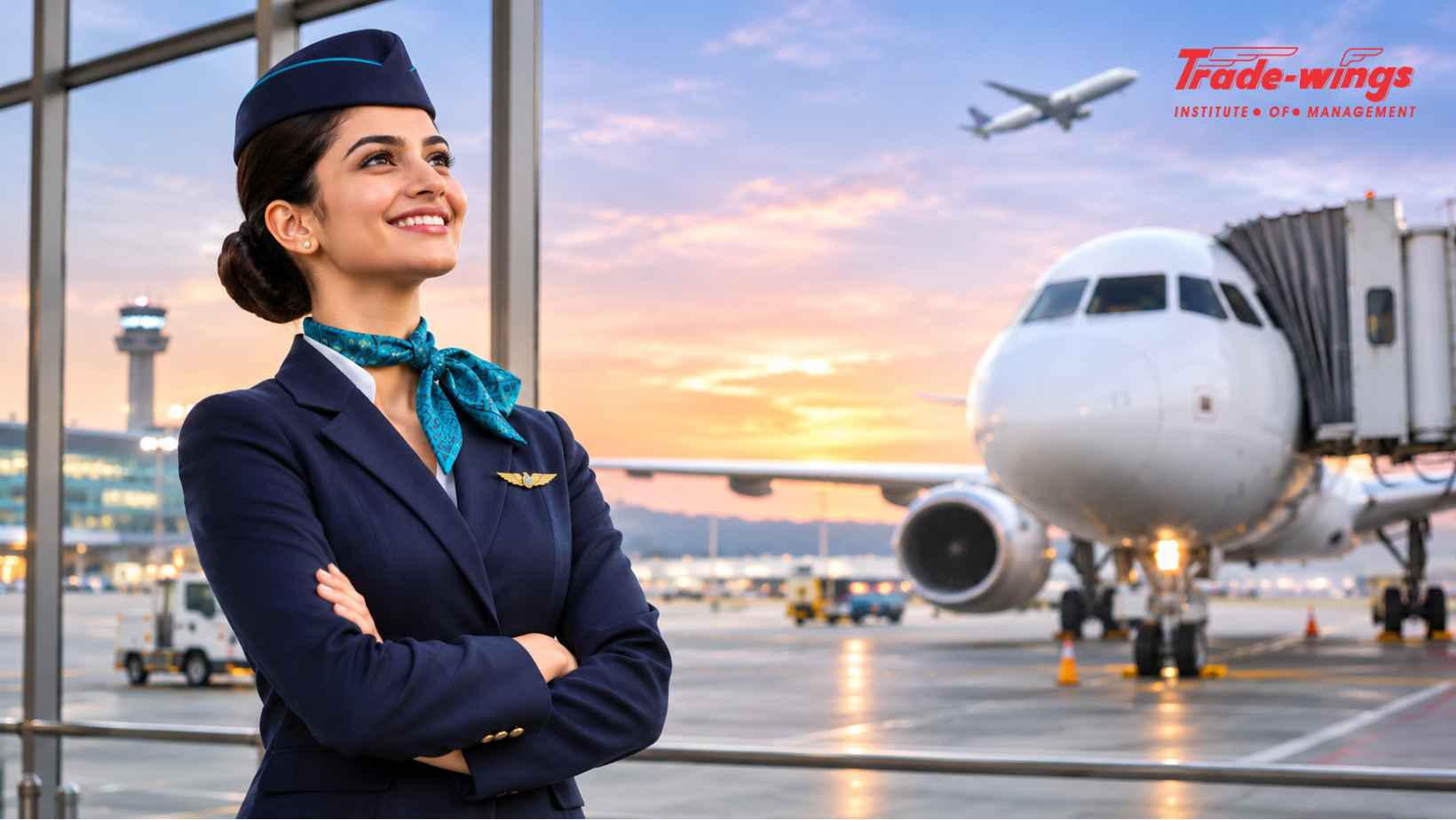
For students interested in working onboard aircraft, Online Cabin Crew Courses offer another learning pathway. These courses can help aspiring cabin crew members develop foundational knowledge of aviation, passenger handling, communication and onboard service.
While ramp personnel and cabin crew have different responsibilities, both are important parts of the aviation ecosystem.
Before enrolling in any programme, students should review the curriculum, eligibility criteria, practical learning opportunities and relevant course recognition.
To explore aviation training opportunities, visit Trade Wings Travel Institute: https://tradewingstravelinstitute.com/
Career Opportunities After an Airport Ramp Operations Course
After completing relevant training and meeting employer requirements, candidates can explore entry-level opportunities in airport ground handling and operations.
Some potential job roles include:
Airport Ramp Agent: Assists with aircraft ground handling activities, baggage movement and ramp coordination.
Ground Operations Executive: Supports different ground operations activities and coordinates with relevant airport teams.
Ground Handling Assistant: Assists with passenger services, baggage handling and aircraft servicing activities.
Baggage Handling Executive: Supports baggage movement, loading, unloading and coordination with airport baggage teams.
Ramp Operations Assistant: Helps coordinate aircraft turnaround activities and ground support equipment.
Aircraft Marshalling Assistant: Supports aircraft parking and positioning procedures under the applicable airport operating standards.
Career progression depends on experience, qualifications, employer requirements and additional operational training.
Every Smooth Flight Begins With Teamwork on the Ground
The next time you board an aircraft, remember that its journey began long before you took your seat.
Someone guided it safely into the parking stand. Someone unloaded your luggage. Someone checked the aircraft, replenished its supplies and prepared the cabin. Someone ensured that the ground equipment was cleared before departure.
These professionals may not be visible during your flight, but their work contributes to thousands of journeys every day.
Airport ramp operations remind us that aviation is not just about pilots flying aircraft or passengers travelling to different destinations. It is also about the people on the ground who work with precision, discipline and dedication.
For students aspiring to enter this exciting industry, learning about airport ground handling and aircraft turnaround can be a valuable starting point.
Explore aviation learning opportunities at Trade Wings Travel Institute, including the Airport Ramp Operations Course, Certificate Course in Aviation Management and Online Cabin Crew Courses, and take the first step towards understanding the many career possibilities within aviation.
Frequently Asked Questions About Airport Ramp Operations
1. What is an Airport Ramp Operations Course?
An Airport Ramp Operations Course introduces students to the activities performed on the airport apron, including aircraft marshalling, baggage handling, ground support equipment, ramp safety and aircraft turnaround procedures. It helps aspiring aviation professionals understand how ground handling teams prepare aircraft for departure.
2. What are airport ramp operations?
Airport ramp operations involve managing ground activities around an aircraft while it is parked at the airport. These include baggage loading and unloading, passenger boarding coordination, refuelling, aircraft servicing, catering, cleaning and pushback.
3. Why are airport ramp operations important?
Airport ramp operations ensure that aircraft are serviced, checked and prepared for their next flight. Proper coordination between ground handling teams helps maintain operational safety, minimise unnecessary delays and support efficient aircraft turnaround.
4. What are the different activities involved in airport ramp operations?
The major activities include aircraft parking and marshalling, passenger disembarkation, baggage and cargo handling, refuelling, catering, cabin cleaning, maintenance coordination, water and lavatory servicing and aircraft pushback.
5. What equipment is used in airport ramp operations?
Common ground support equipment includes baggage tractors, belt loaders, pushback tugs, passenger stairs, ground power units, cargo loaders, catering trucks and aircraft tow bars. Each piece of equipment supports a specific ground handling activity.
6. What skills are required to work in airport ramp operations?
Important skills include communication, teamwork, time management, situational awareness, attention to detail and knowledge of airport safety procedures. Understanding ground handling activities and specialised airport equipment is also valuable.
7. How can I start a career in airport ramp operations?
Students interested in this field can explore aviation training programmes after completing their educational qualifications. An Airport Ramp Operations Course can help them understand aircraft ground handling, ramp safety, baggage management and turnaround procedures.
Trade Wings Travel Institute offers aviation-focused learning opportunities for students interested in exploring different career paths within the aviation industry.
8. What is the difference between airport ramp operations and cabin crew operations?
Airport ramp operations focus on aircraft ground handling, baggage movement, aircraft servicing and departure preparation. Cabin crew operations focus on passenger safety, onboard service, emergency procedures and passenger assistance during flights.
Both departments contribute to the smooth functioning of airline operations.
9. What courses can help students build a career in aviation?
Students can explore different aviation programmes depending on their interests and career goals.
Trade Wings Travel Institute features learning pathways such as the Airport Ramp Operations Course, Certificate Course in Aviation Management and Online Cabin Crew Courses. Each programme focuses on a different aspect of the aviation industry.
10. Can I pursue aviation training after completing Class 12?
Yes. Students who have completed Class 12 can explore aviation and airport management training opportunities, subject to the eligibility requirements of individual programmes. Aviation management, ground handling and cabin crew training are some of the areas they can consider.
11. Why should I choose Trade Wings Travel Institute for aviation training?
Trade Wings Travel Institute provides aviation, travel, tourism and hospitality education opportunities. Students interested in exploring aviation careers can learn about programmes such as the Airport Ramp Operations Course, Certificate Course in Aviation Management and Online Cabin Crew Courses.
Reviewing the curriculum, training approach, eligibility and practical learning opportunities can help students choose a programme aligned with their career interests.
12. What career opportunities are available after an Airport Ramp Operations Course?
After completing relevant training and meeting employer requirements, candidates can explore entry-level roles such as Airport Ramp Agent, Ground Operations Executive, Ground Handling Assistant, Baggage Handling Executive, Ramp Operations Assistant and Aircraft Marshalling Assistant.
Career growth depends on professional experience, additional qualifications and employer-specific requirements.
Explore Aviation Courses at Trade Wings Travel Institute
Interested in learning more about airport operations and aviation careers? Explore the available aviation programmes at Trade Wings Travel Institute.


Leave a comment