An airport is much more than a place where passengers check in, board flights and collect their luggage. Behind every successful take-off and landing is a carefully coordinated network of professionals, advanced equipment and ground operations working together around the clock. From aircraft parking and baggage handling to passenger boarding, aircraft refuelling and runway coordination, every activity plays an important role in ensuring safe and efficient flight operations.
One of the most critical areas of airport management is airport ramp operations, where ground staff coordinate activities around an aircraft while it is parked at the airport. These operations include baggage loading and unloading, aircraft marshalling, pushback, ground handling and coordination with airline and airport teams. Even a small delay in one activity can affect the entire flight schedule.
Understanding these behind-the-scenes activities can also help students explore exciting career opportunities in the aviation industry. Enrolling in an airport ramp operations course is a practical way to learn about aircraft ground handling, ramp safety, airport equipment and operational coordination. Whether you aspire to work on the airport apron or build a long-term career in aviation, understanding airport operations is the first step towards discovering the many opportunities this industry offers.
1. The Airport Operations Control Centre: The Brain Behind Everything
Imagine trying to manage hundreds of flights, thousands of passengers, multiple runways and countless ground vehicles at the same time. It sounds overwhelming, doesn't it? This is precisely why modern airports have an Airport Operations Control Centre (AOCC), sometimes referred to as an Airport Operations Centre (APOC). Think of it as the command centre of the entire airport. It brings together information from different departments and helps airport teams coordinate their activities in real time. Professionals working here monitor flight schedules, weather conditions, runway availability, aircraft parking positions, terminal activity and operational disruptions. For instance, if heavy rainfall suddenly affects runway conditions, the control centre coordinates with relevant teams to assess the situation and manage operational changes. If an arriving flight is delayed, gate allocations and ground-handling schedules may need adjustments. Every decision can affect several other departments. What makes this particularly interesting is that most passengers never even know this coordination is happening. While someone enjoys a coffee at the airport café, an entire team could be working behind the scenes to ensure their flight departs safely and on time.
2. Runway Operations: Preparing the Ground for Every Take-off
For passengers, a runway is simply the long stretch of tarmac where aircraft take off and land. For airport professionals, however, it is one of the most carefully monitored areas of the facility. Before aircraft begin their daily operations, runway inspection teams carry out safety checks. They look for cracks, surface damage, loose materials and Foreign Object Debris (FOD). Even something as small as a metal fragment, loose stone or piece of equipment can pose a serious risk to an aircraft. Wildlife management is another important responsibility. Birds and other animals near active runways can create dangerous situations, particularly during take-off and landing. Specialised teams monitor wildlife activity and use approved deterrent techniques to keep animals away from aircraft movement areas.
Then comes the role of Air Traffic Control (ATC). These professionals are responsible for managing aircraft movements and maintaining safe separation between aircraft. Their work involves coordinating clearances, guiding aircraft during taxiing, managing arrivals and departures, and communicating with pilots throughout different stages of flight.
ATC functions through different areas of responsibility, including tower, approach and area control. Every instruction matters because aviation depends on precision, communication and strict safety procedures.
3. Aircraft Turnaround: What Happens Between Two Flights?
Here is something most passengers rarely think about. An aircraft does not simply land, park and wait for its next journey. The moment it reaches its parking stand, another carefully planned operation begins. This process is known as aircraft turnaround. It involves preparing the aircraft for its next departure within a scheduled time while ensuring all necessary safety and service requirements are met.
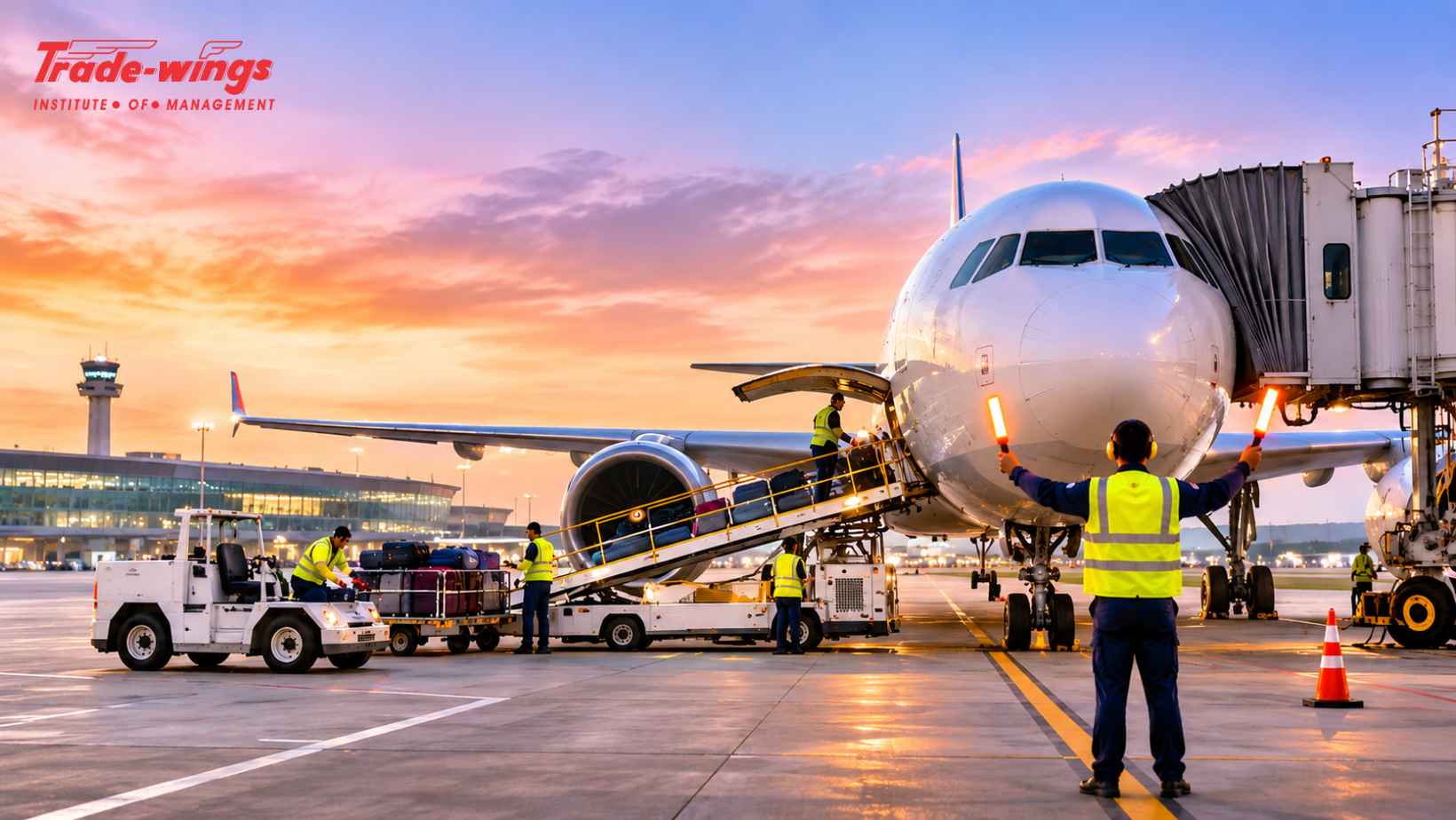
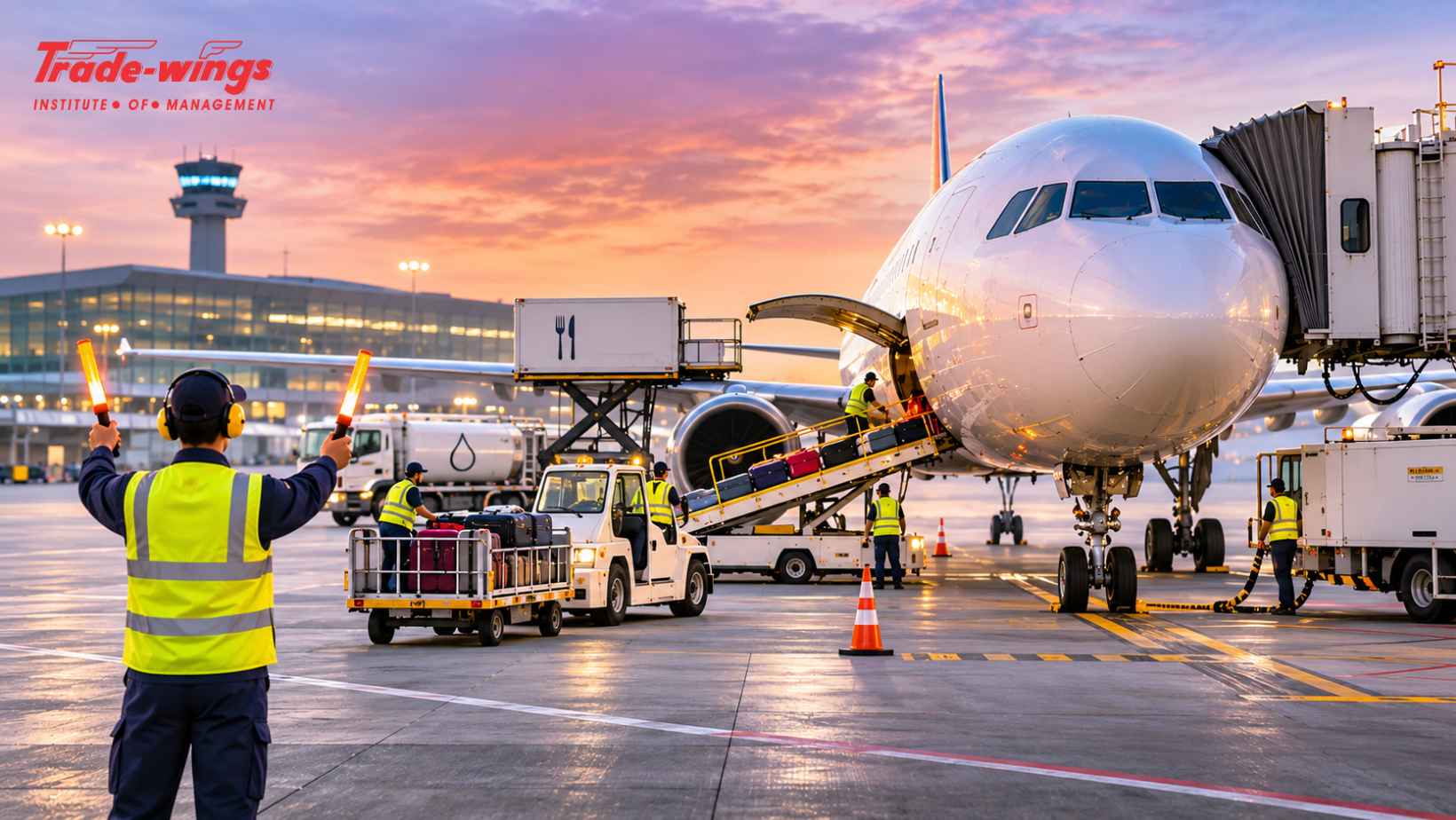
As soon as the aircraft is parked and the appropriate safety procedures are completed, ground-handling teams get to work. Baggage handlers unload passengers' luggage, catering vehicles replenish food and beverages, cleaning teams prepare the cabin, and engineering personnel carry out necessary inspections.
Fuel trucks or hydrant refuelling systems supply the aircraft with the required fuel. Other specialised vehicles provide drinking water and service the aircraft's lavatory systems. Each team has a specific responsibility, and many activities take place simultaneously.
Once passengers have disembarked, the cabin has been prepared, luggage and cargo have been loaded, and all required checks have been completed, the aircraft moves towards its next departure. This is where the pushback tug comes into the picture. The specialised vehicle connects to the aircraft and carefully pushes it away from the parking stand so that it can taxi towards the runway. The next time you board a flight and notice ground vehicles moving around the aircraft, remember that you are watching a highly coordinated operation unfold in front of you.
4. Baggage Handling: The Secret Journey of Your Suitcase
Have you ever watched your suitcase disappear behind the check-in counter and wondered where it goes? Interestingly, your luggage begins a separate journey long before you reach the boarding gate.
During check-in, each bag receives a unique baggage tag containing information that helps identify its destination, flight and routing. Barcode-based systems are widely used, while some airports and airlines also use RFID technology to support baggage identification and tracking. Once the luggage enters the baggage handling system (BHS), it travels through a network of conveyor belts, automated sorting equipment and specialised trays. Security screening systems inspect baggage according to applicable aviation security procedures. Automated systems then help direct each bag towards the correct flight.
Transfer baggage requires additional coordination because it may need to move between connecting flights within a limited time. Eventually, the sorted luggage reaches the baggage loading area, where ground staff load it into the appropriate aircraft compartments.
It is an impressive operation because thousands of bags may be moving through the system simultaneously. The next time your suitcase appears on the arrival carousel, you will know that it has travelled through an entire network of people and technology to reach you.
5. Terminal Operations: Managing the Passenger Experience
An airport terminal is where passengers experience the most visible side of airport operations. However, keeping this space organised requires continuous coordination.
Terminal operations teams manage check-in counters, self-service kiosks, boarding gates, passenger queues, information desks, retail spaces and other facilities. Their responsibility is to ensure that passengers can move through the airport comfortably and reach their respective boarding areas. Security screening is another essential part of the process. Passengers and their belongings undergo checks according to applicable security regulations before entering restricted departure areas. At international airports, immigration and border-control procedures also verify travel documents and passenger eligibility.
Behind every organised queue and functioning boarding gate is a team working to manage passenger movement, respond to queries and address unexpected situations.
Consider a family travelling internationally for the first time. They might be confused about baggage allowances, immigration procedures or boarding gates. A helpful airport employee can turn an otherwise stressful experience into a comfortable one. That human interaction is just as important to airport operations as the technology supporting it.
6. Emergency and Fire Services: The People Always Ready to Respond
Airports are designed around one fundamental priority: safety. While most passengers experience a smooth journey, specialised emergency teams remain prepared for situations that may require immediate action.
Aviation Rescue and Fire Fighting (ARFF) teams are among the most important emergency services operating at an airport. These specially trained professionals are equipped to respond to aircraft emergencies, fires and other incidents on or around the airfield.
They operate specialised firefighting vehicles, equipment and communication systems, remaining on standby throughout airport operating hours. International aviation standards establish stringent response-time expectations for airport rescue and firefighting services, with the widely recognised three-minute objective applying to the initial response to an aircraft accident or incident under specified conditions. Their work involves regular training, emergency drills, equipment inspections and coordination with other airport authorities.
Beyond firefighting, airport emergency preparedness also involves medical teams, security personnel, airport management and other relevant agencies. Their combined efforts help ensure that unexpected situations are handled with speed, discipline and professionalism.
It is easy to overlook these professionals when everything is running smoothly. But their readiness is one of the most important reasons passengers can travel with confidence.
7. The People Who Make an Airport Work
Technology may be transforming aviation, but airports continue to depend on people. Behind every successful departure are professionals with different skills, responsibilities and areas of expertise. Airport operations managers coordinate multiple departments. Ground-handling professionals prepare aircraft for departure. Air traffic controllers manage aircraft movements. Security personnel protect restricted areas, while customer service executives assist passengers throughout their journey. There are also engineers, maintenance technicians, baggage handlers, housekeeping staff, cargo specialists and aviation safety professionals.Every role contributes to a larger system. A delayed baggage transfer can affect an aircraft's departure. A technical inspection may require a change in the operational schedule. A sudden weather disruption can involve several departments at once.
This is what makes airport management such an interesting career field. It combines teamwork, communication, technical understanding, decision-making and the ability to remain calm under pressure.
Building a Career in Airport and Aviation Operations
The aviation industry offers several career opportunities for people interested in airport management, passenger services, airline operations, ground handling and aviation safety.
For aspiring professionals, understanding the role of regulatory bodies is an important starting point. In India, the Directorate General of Civil Aviation (DGCA) oversees important aspects of civil aviation safety and regulation, while the Airports Authority of India (AAI) manages numerous airports and provides essential aviation infrastructure and services. Exploring Civil Aviation Authorities courses and relevant aviation training programmes can help students understand the industry's regulatory environment and operational requirements. A Certificate Course in Aviation Management can provide foundational knowledge of airport functions, airline operations, ground handling, customer service and aviation management. Such training can be particularly useful for students looking to understand the industry before entering the workforce. It is important to check the course curriculum, practical exposure, recognition and career guidance offered by the training provider before enrolling. Similarly, Online Cabin Crew Courses can introduce aspiring cabin crew professionals to important subjects such as passenger handling, aviation terminology, communication, grooming standards and in-flight service. However, online learning should be viewed as foundational preparation rather than a substitute for the mandatory airline-specific training, assessments and safety instruction required for cabin crew employment. The most important thing is to choose training that develops both industry knowledge and practical skills. Aviation is an environment where professionalism, attention to detail and responsibility matter every single day.
The Next Time You Visit an Airport, Look Beyond the Boarding Gate
An airport is a place where thousands of individual journeys begin, but there is an equally fascinating journey happening behind the scenes. From the control centre monitoring flight movements to the baggage team handling suitcases, from engineers inspecting aircraft to emergency professionals standing ready, every department plays a part in keeping aviation moving. The next time you walk through an airport, take a moment to look around. Notice the ground staff coordinating an aircraft turnaround, the employees helping passengers find their gates and the teams working beyond the restricted areas. What appears to be an ordinary travel experience is actually the result of extraordinary coordination.
Because an airport is not just about aircraft taking off and landing. It is about thousands of people working together, often without being noticed, to make sure that someone can reach home, reunite with family, explore a new country or finally take that dream holiday.
And perhaps that is the most fascinating thing about airport operations: behind every smooth journey is a story of teamwork that most passengers never get to see.
Frequently Asked Questions About Airport Operations
1. What are airport operations?
Airport operations refer to all the activities required to ensure an airport functions safely and efficiently. These include aircraft movement, passenger handling, baggage management, runway coordination, security checks, ground handling and maintenance of airport facilities.
2. What happens behind the scenes when an aircraft lands?
When an aircraft lands, several ground operations begin simultaneously. Ground staff guide the aircraft to its designated parking bay, position ground support equipment, unload passenger baggage and cargo, arrange cleaning, coordinate refuelling and prepare the aircraft for its next departure.
3. What are airport ramp operations?
Airport ramp operations involve managing all ground activities that take place around an aircraft while it is parked at the airport. These include aircraft marshalling, baggage handling, loading and unloading, pushback, refuelling coordination and positioning ground support equipment.
4. What is the role of an airport ramp agent?
An airport ramp agent assists with aircraft ground handling activities. Their responsibilities may include loading and unloading baggage, operating ground support equipment, following ramp safety procedures, coordinating with ground teams and ensuring aircraft turnaround activities are completed on time.
5. What equipment is used in airport ramp operations?
Airport ramp operations involve specialised ground support equipment such as baggage tractors, belt loaders, aircraft pushback tractors, passenger stairs, ground power units, cargo loaders and aircraft tow bars. Each piece of equipment serves a specific purpose in aircraft handling and turnaround operations.
6. Why are ground handling operations important at airports?
Ground handling operations ensure that aircraft are prepared safely and efficiently for departure. Proper coordination of baggage loading, passenger boarding, aircraft servicing and pushback helps minimise delays, maintain safety standards and improve overall airport efficiency.
7. What is an aircraft turnaround process?
Aircraft turnaround refers to the activities performed between an aircraft's arrival and its next departure. This process includes passenger disembarkation, baggage unloading, cabin cleaning, refuelling, catering, baggage loading, passenger boarding and final departure preparation.
8. What qualifications are required to work in airport ramp operations?
The eligibility requirements vary depending on the employer and job role. Candidates who have completed their 12th standard can explore entry-level aviation training opportunities. Completing a specialised airport ramp operations course can help them understand ground handling procedures, ramp safety, airport equipment and aircraft turnaround processes.
9. What career opportunities are available after an airport ramp operations course?
After completing relevant training, candidates can explore opportunities in roles such as:
Airport Ramp Agent
Ground Handling Executive
Ramp Operations Assistant
Baggage Handling Executive
Aircraft Marshalling Assistant
Ground Operations Executive
Career progression depends on experience, qualifications, employer requirements and additional operational training.
10. Is airport ramp operations a good career option for aviation aspirants?
Yes. Airport ramp operations can be a rewarding career for individuals interested in practical, hands-on aviation work. It offers exposure to aircraft, airport equipment, ground handling procedures and real-time coordination within a fast-paced airport environment.
11. How can I learn airport ground handling and ramp operations?
Students interested in this field can enrol in a specialised aviation training programme covering airport ground handling, ramp safety, aircraft servicing, baggage management and operational procedures. Practical exposure and industry-oriented training can help students prepare for entry-level opportunities in airport operations.
12. What is the difference between airport operations and ramp operations?
Airport operations cover the overall functioning of an airport, including passenger services, security, terminal management, runway coordination and aircraft movement. Ramp operations are a specialised part of airport operations focused on aircraft ground handling and activities performed on the airport apron.



Leave a comment